
Introduction
Department History
1992: Established as the Department of Environmental Engineering at National Ilan Institute of Agriculture and Technology
1997: Reorganized as the Department of Environmental Engineering at National Ilan Institute of Technology
2003: Reorganized as the Department of Environmental Engineering at National Ilan University
2007: Added the Master's Program in Environmental Engineering
Department Features
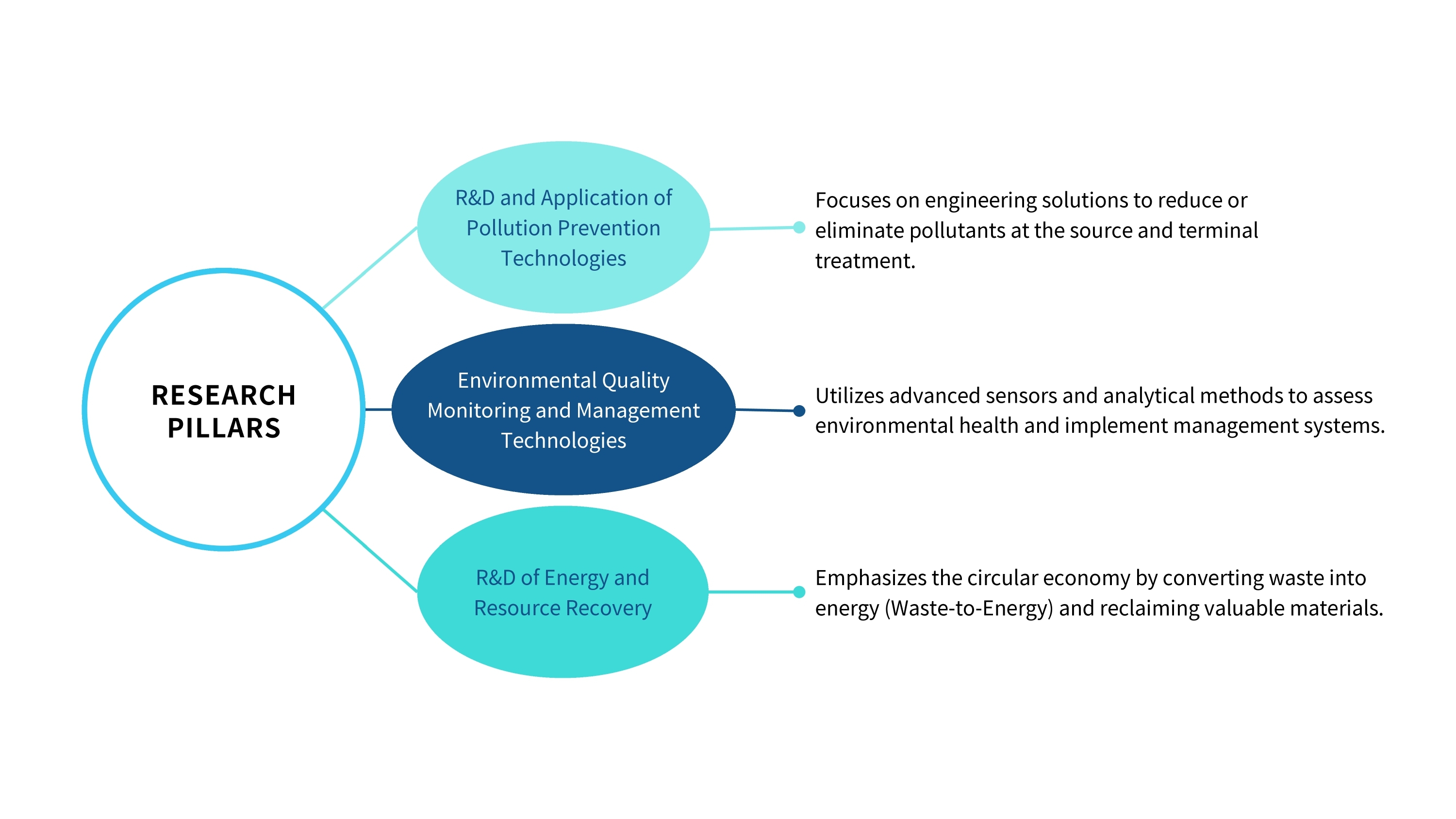
Entering its 30th anniversary in 2022, our department boasts a long history with outstanding alumni making significant contributions across the country. The department is accredited by the Institute of Engineering Education Taiwan (IEET), ensuring our education meets international standards. Our primary research areas include the R&D and application of pollution prevention technologies, the application of environmental quality monitoring and management technologies, and the research and development of energy and resource regeneration. Graduates enjoy broad career prospects and lucrative salaries, with pathways including engineers, licensed environmental engineers, environmental civil service roles, state-owned enterprises, the tech industry, and engineering consulting firms. Furthermore, it serves as an excellent stepping stone for further study abroad and is a cradle that paves the way for admission into graduate programs at top-tier domestic institutions (such as NTU, NTHU, NYCU, and NCKU) as well as leading international universities. We welcome you to join us!
Academic Focus
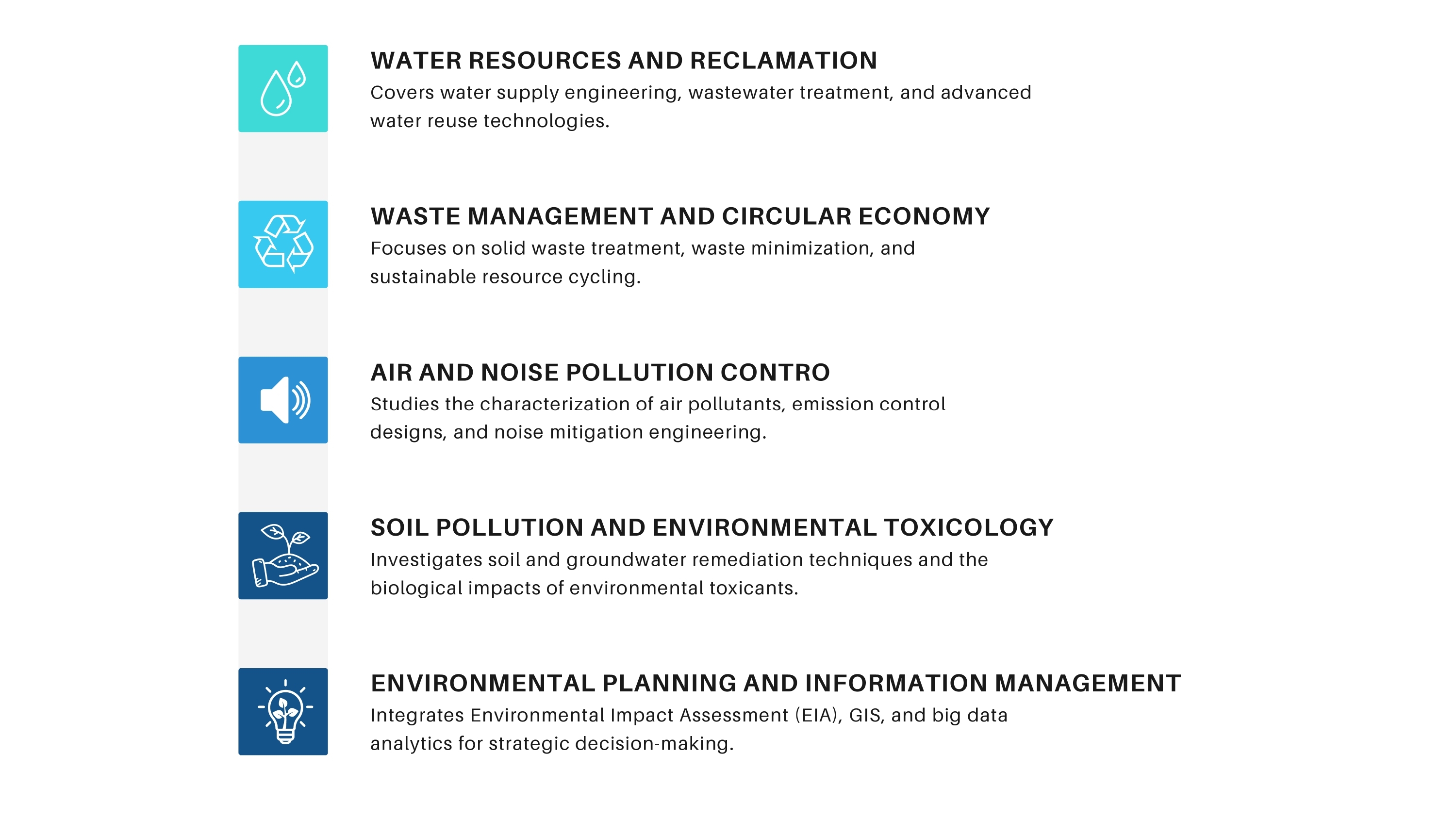
Our core curriculum encompasses foundational courses in environmental engineering and science, water resources and regeneration, waste and the circular economy, environmental planning and information management, air and noise pollution, carbon neutrality and climate change, soil pollution and environmental toxicants, as well as environmental sustainability and technological innovation. Recently, the department has also placed a strong emphasis on cutting-edge topics, including high-tech waste resource recovery, the development of novel biomass energy, the fabrication of environmental nanomaterials, the R&D of environmental catalysts, and the application of environmental big data monitoring.

 EV @ FB
  EV @ YOUTUBE